Luoyang Travel Guide: Six Stops in an Ancient Capital (with a Three-Day Itinerary)
Luoyang is one of the old homes of Chinese civilization, the birthplace of the Heluo culture. Thirteen orthodox dynasties made it their capital, and more than twenty regimes used it as an administrative center — no city in China was a capital earlier, more often, or longer. It was also the center of the Sui-Tang Grand Canal and the eastern starting point of the Silk Road, and today the city holds three World Heritage properties across six sites. The six places below — the Longmen Grottoes, White Horse Temple, the Luoyang Museum, Guanlin, the Sui-Tang Luoyang City ruins, and the Yingtian Gate area of the city — have all had their origins checked against public sources. This city does not speak through skyscrapers; it speaks through the millennia under the ground and in the cliff faces.
When to come to Luoyang
Luoyang's best seasons are April and October. April is peony season, when the China Luoyang Peony Culture Festival is in full swing and the Wangcheng Park and Sui-Tang ruins botanical garden are full of flowers — the liveliest time of the whole year. October brings crisp autumn skies, comfortable for the grottoes and the old town, and fewer crowds. Summer is hot; July and August at the grottoes and ruins parks mean sun, so go early. Winter is cold but uncrowded, and the Longmen and White Horse Temple take on a different character under snow. Spring winds in Luoyang are strong, and during peony season book lodging and transport well in advance.
Places worth visiting in the city
Longmen Grottoes
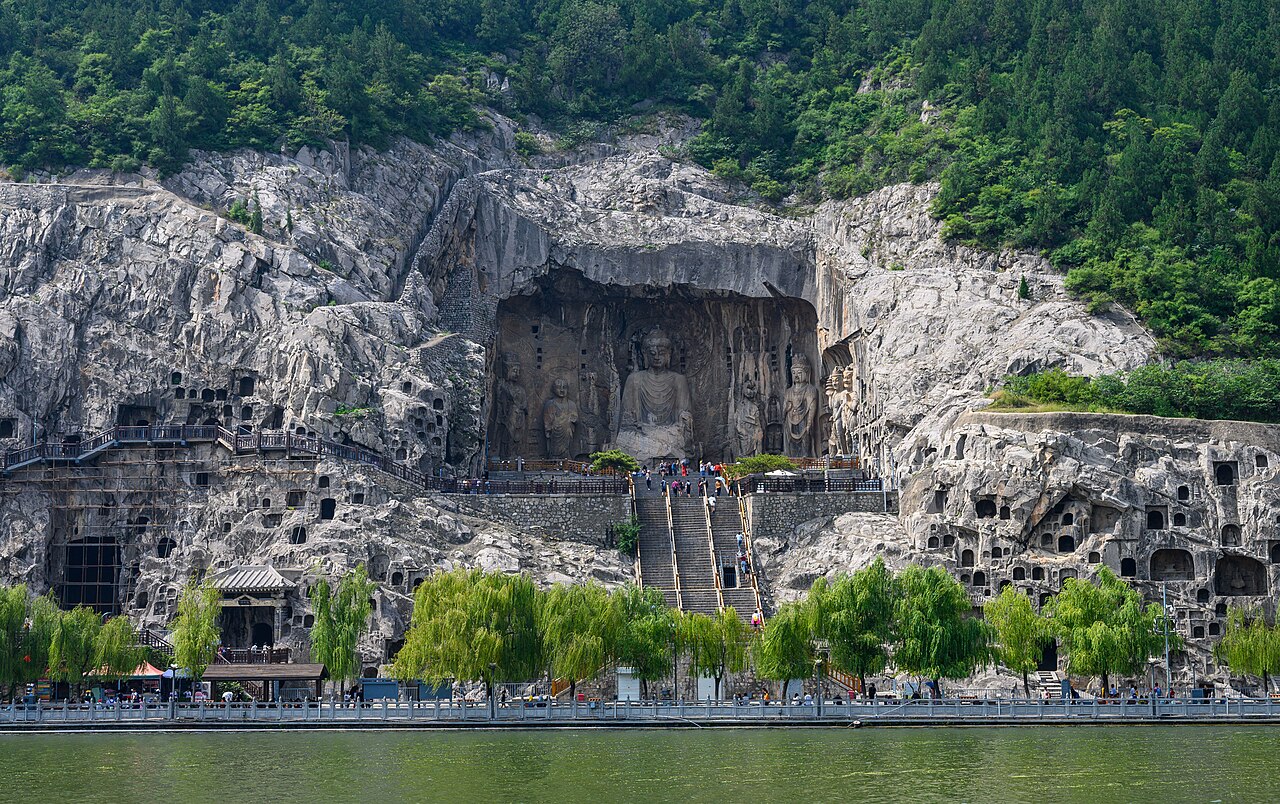
The Longmen Grottoes lie south of the city along both banks of the Yi River, carved into the cliffs of Longmen Mountain and Xiangshan. Work ran from the Northern Wei through the Northern Song, more than four hundred years, leaving over 2,100 niches, more than 100,000 statues, and over 3,600 inscribed steles. Inscribed as a World Heritage site in 2000, Longmen stands with Yungang and Mogao as one of China's three great grotto complexes.
Longmen's most overwhelming sight is the Vairocana Buddha at Fengxian Temple, the main figure over seventeen meters tall, carved in the Tang and said to have been modeled on the likeness or build of Empress Wu Zetian — a face at once solemn and gentle, the emblem of Longmen. Standing by the river and looking at the niches packed across both cliff faces, you understand what a millennium of stone carving means. Longmen divides into western and eastern sections, the western being the highlight, taking the better part of a day. The Longmen Twenty are treasures of Northern Wei calligraphy, a pilgrimage for anyone who studies the brush.
White Horse Temple
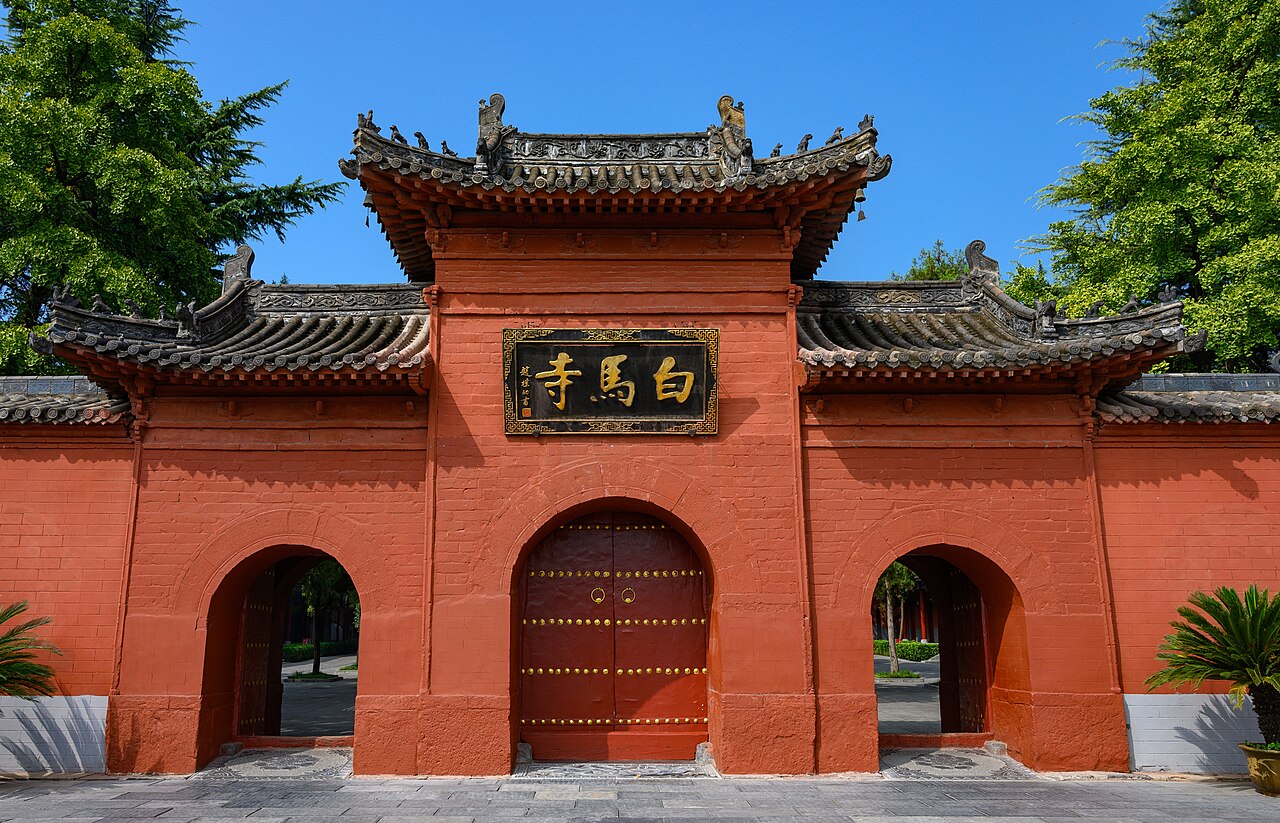
White Horse Temple lies over twenty kilometers east of the old city, backing on Mangshan and facing the Luo River. Founded in the eleventh year of the Eastern Han Yongping era, AD 68, it is the first monastery built in China after Buddhism arrived, named for the white horse that carried the scriptures. From then on China's monastic complexes were all called si, and because Buddhism set down roots here before spreading across the country, the temple is known as the ancestral court and source of Chinese Buddhism.
The temple preserves a large number of Yuan-dynasty dry-lacquer statues — the Buddhas of the Three Ages, the two heavenly generals, the eighteen arhats — of precious workmanship. In 1961 White Horse Temple was listed among the first batch of national protected cultural relics. Incense still burns here, and the ancient cypresses and halls carry the patina of centuries. It is half an hour from the city; half a day is enough, and it pairs well with other points east of town.
Luoyang Museum
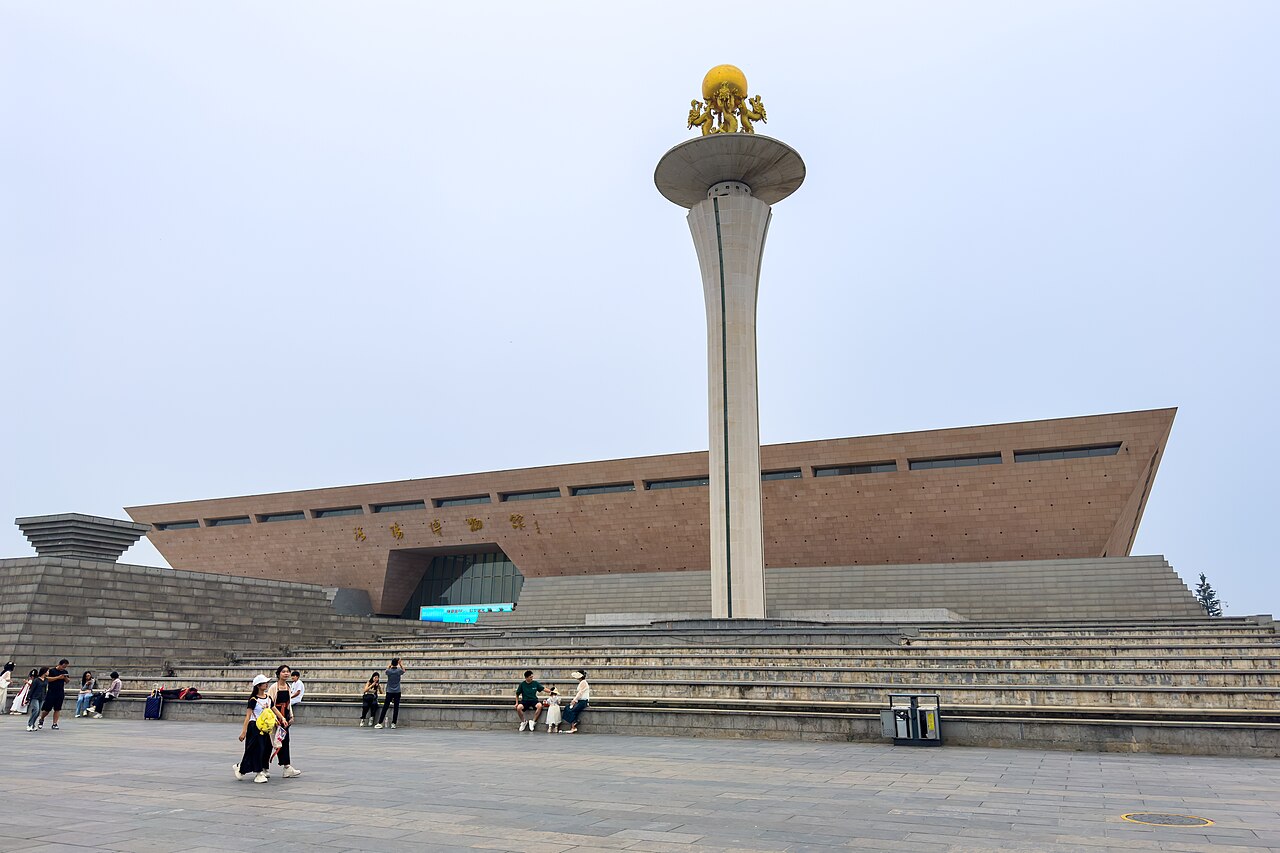
The Luoyang Museum is a national first-grade museum, founded in 1958, with its current building in Luolong District opened in 2011 and more than 11,000 relics on display. Its collection follows a single thread — the Heluo culture — from the Yangshao and Longshan cultures through the Xia, Shang, and Zhou, all the way down to the Ming, Qing, and Republican eras, a dynastic span unmatched among China's prefecture-level museums. Walking through it before or after the city's sights is like reading the ancient capital's history from the beginning.
The museum's strengths are jade and Tang sancai. The three-color horses and camels, vividly glazed, are direct evidence of Tang Luoyang's prosperity. The museum is free, with ID reservation, and a visit runs two to three hours. It is not far from the Longmen Grottoes or Guanlin and can share a day with them.
Guanlin
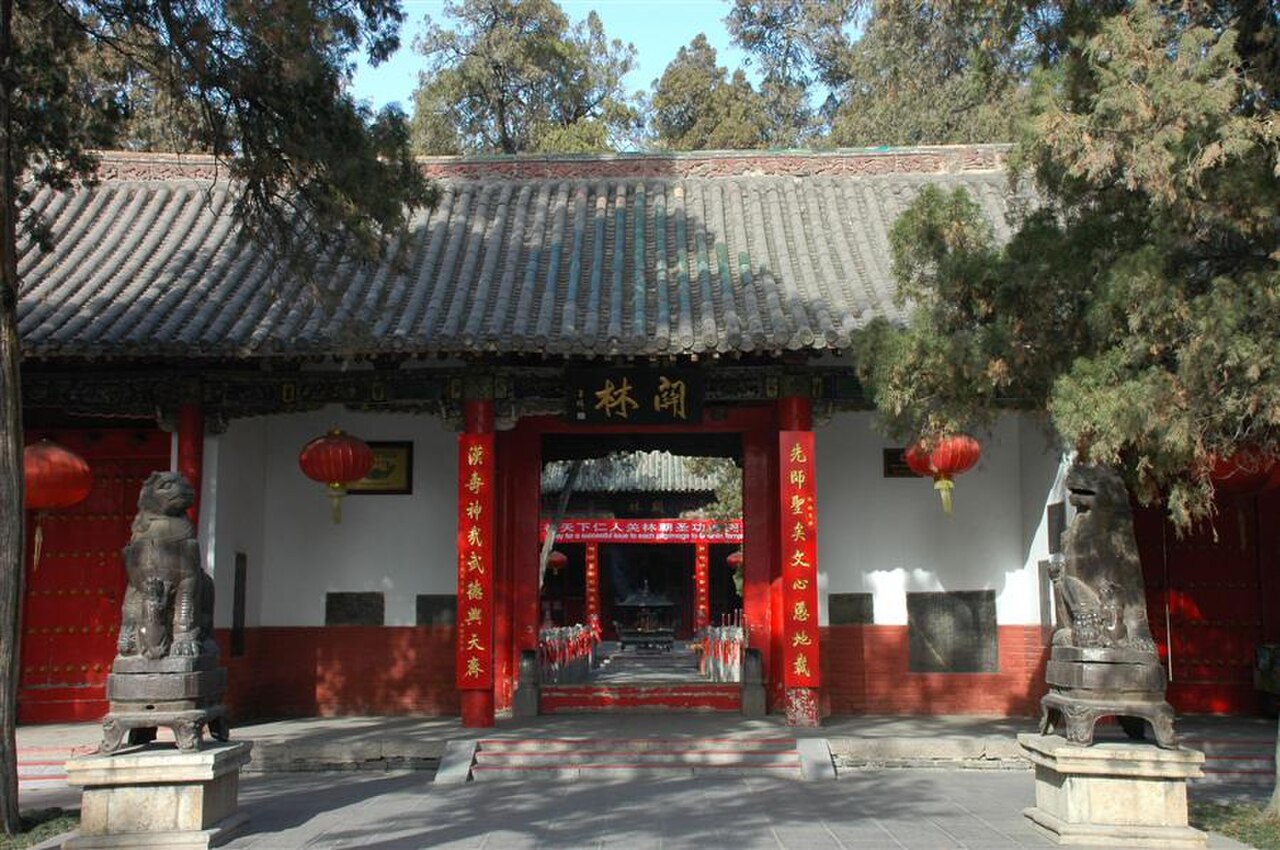
Guanlin is traditionally held to be the burial place of Guan Yu's head. After Guan Yu was killed following the fall of Maicheng, Sun Quan sent his head to Cao Cao, who buried it with princely rites south of Luoyang; a temple rose on the site and became Guanlin. It is one of the three great Guan Yu temples in China and beyond, built to its present scale in the Ming Wanli reign, with ancient cypresses, halls, and incense that has never gone out.
For Three Kingdoms devotees, Guanlin is an unmissable stop in Luoyang. Guan Yu never served a single day in Luoyang while alive, yet he has been worshipped here for over a thousand years, his incense stronger than many an emperor's — a fact interesting in itself. Guanlin is sizeable, with both temple and tomb, taking an hour or two. It is not far from the Longmen Grottoes and can be arranged in the same outing.
Sui-Tang Luoyang City National Heritage Park
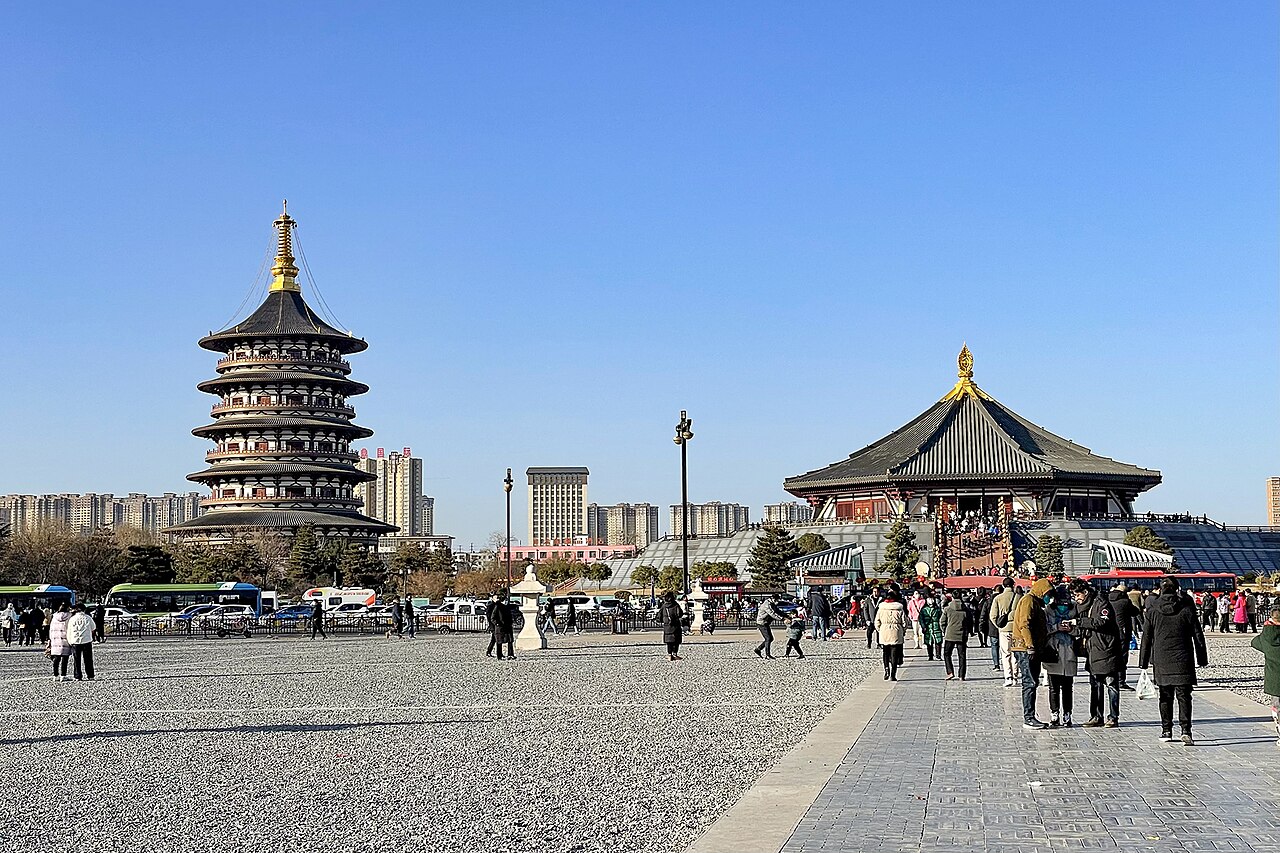
The Sui-Tang Luoyang City was the eastern capital of both the Sui and Tang dynasties, and Empress Wu Zetian lived here for years after taking the throne, renaming it the Divine Capital. The old palace axis, the Mingtang, the Tiantang, and the Yingtian Gate are now protected as a national heritage park, with reconstructions raised on the original sites. Yingtian Gate was the main gate of the palace city; the rebuilt gatehouse now stands in the center of the old city, especially imposing when lit at night.
The park's highlights are the Mingtang and the Tiantang. The Mingtang was where Wu Zetian held court, the Tiantang a towering Buddhist pagoda, both colossal Tang structures now reconstructed and exhibited on their original foundations. Seeing the ruins and exhibits by day and the Yingtian Gate lights by night is Luoyang's most fashionable outing of recent years. It sits right in the city, easy to reach, an hour or two to visit.
Yingtian Gate and the Old Town by Night
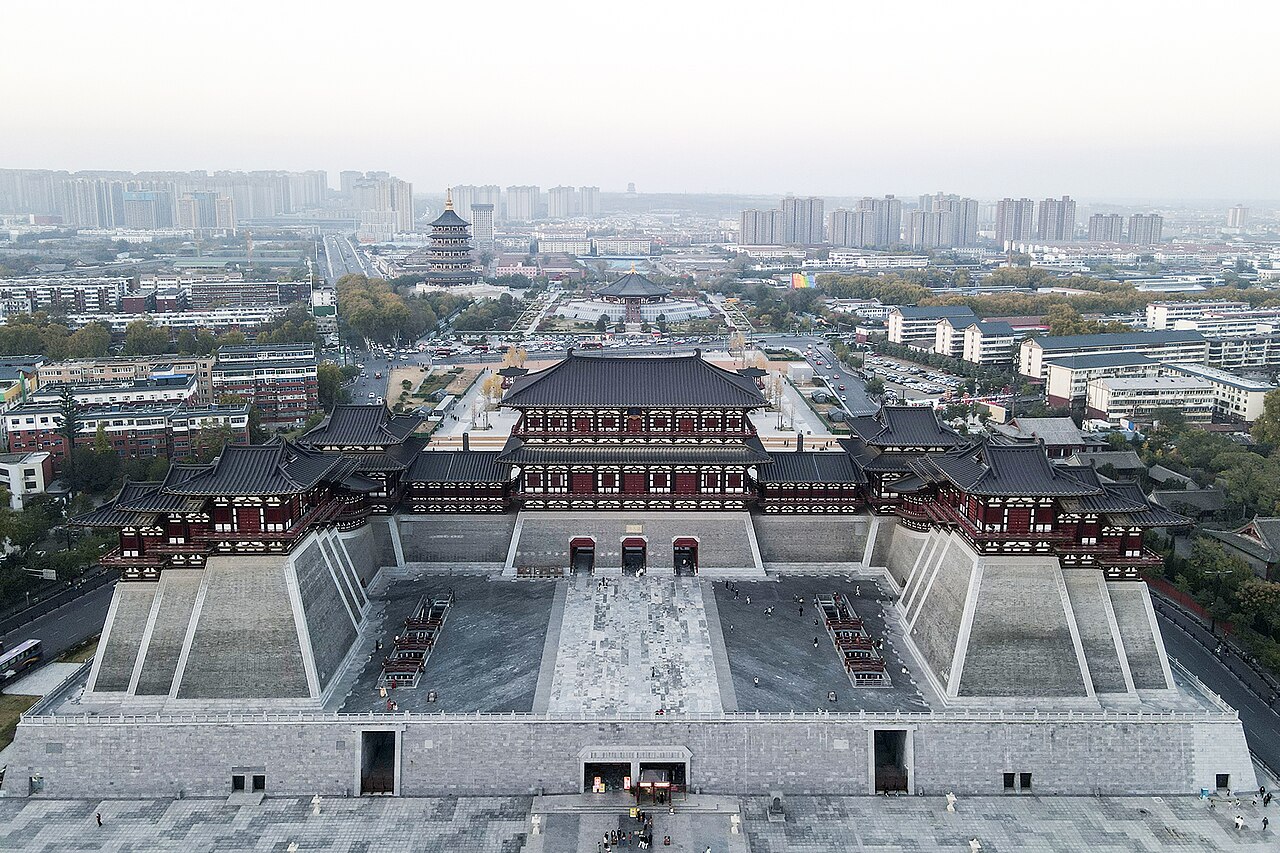
Yingtian Gate is the main gate of the Sui-Tang palace city and now the cover image of Luoyang. The rebuilt gatehouse carries the air of the High Tang, its eaves stacked in layers; at night the whole tower lights up over its square, the city's most recognizable scene. It is not just a photo spot — inside and around the gate lies the core of the Sui-Tang Luoyang City ruins.
The gate connects to Luoyang's old town and Cross Street. After the lights, head into the old town, where stone-paved lanes hold the old flavor of Luoyang and the night market runs one soup house and water banquet restaurant after another. Luoyang's night is half in the lights of Yingtian Gate, half in the smoke of the old town.
Eating in Luoyang
Luoyang's signature is the water banquet. It is a full set of soup-based dishes — twenty-four courses, every one in broth — with peony swallow nest, sliced meat in broth, and fried meatballs among the famous names, sour and spicy and appetite-opening. Morning means soup: beef soup, mutton soup, or donkey soup with flatbread or youxuan, the start of a Luoyang day. Jiangmiantiao is the old home flavor of Luoyang, noodles in a fermented sour broth that outsiders may not take to at first but grow to crave. In peony season there is peony cake. Soup houses and water-banquet restaurants are everywhere; follow the locals into whichever one has a queue.
How to arrange the route
Three days covers the essence of the ancient capital.
Day one goes to the Longmen Grottoes — enter in the morning, the Vairocana Buddha at Fengxian Temple the priority — then Guanlin in the afternoon and back to the city by evening.
Day two: the Luoyang Museum in the morning, White Horse Temple in the afternoon, and the old town's Cross Street at night with Yingtian Gate lit up.
Day three: the Sui-Tang Luoyang City National Heritage Park, the Mingtang and Tiantang, then anything missed on the first day. In April's peony season, a peony garden fits into any day. In three days the thread from Northern Wei to High Tang is clear.
Things to confirm before you go
- The Longmen Grottoes run along the western cliffs, with many steps — wear comfortable shoes and, in summer, sun protection and water.
- April's peony festival is peak season; book lodging and tickets early and reach the popular gardens early.
- The Luoyang Museum is free but requires reservation; check the day's booking and closure schedule.
- Guanlin and the Longmen Grottoes are both south of the city and can share a day, but do not cut the timing too tight.
- The old town's night market is crowded; soup and banquet restaurants queue at mealtimes, so go off-peak.
Frequently asked questions
How many days for Luoyang?
Three is comfortable — a day for the Longmen Grottoes, a day for the museum plus White Horse Temple, and a day for the heritage park plus the old town.
Is Longmen worth visiting?
Very much so. It is a World Heritage site and one of China's three great grottoes, the Vairocana Buddha among the finest stone carvings in the country — coming to Luoyang without seeing Longmen is missing the point.
When do Luoyang's peonies bloom?
April, centered on the peony culture festival. Mid to late April is full bloom across the gardens, and also the peak of the crowds.
What is the water banquet?
A Luoyang-style feast, a full set of broth-based dishes with soup in every course, sour and spicy at its core, best known for peony swallow nest and sliced meat in broth.
Sources
The facts in this article were checked against the following Chinese Wikipedia entries, retrieved August 25, 2025.
- Luoyang (city) https://zh.wikipedia.org/wiki/洛阳市
- Longmen Grottoes https://zh.wikipedia.org/wiki/龙门石窟
- White Horse Temple https://zh.wikipedia.org/wiki/白马寺
- Luoyang Museum https://zh.wikipedia.org/wiki/洛阳博物馆
- Guanlin https://zh.wikipedia.org/wiki/关林
- Sui-Tang Luoyang City ruins https://zh.wikipedia.org/wiki/隋唐洛阳城遗址
All photos are from Wikimedia Commons, used under CC licenses; re-use requires attribution.
- luoyang-longmen.jpg from File 27427-Luoyang (49067744628).jpg, by xiquinhosilva, CC BY 2.0
- luoyang-baima.jpg from File 27467-Luoyang (49085730123).jpg, by xiquinhosilva, CC BY 2.0
- luoyang-museum.jpg from File Exterior, Luoyang Museum 20240929.jpg, by Tim Wu, CC BY-SA 4.0
- luoyang-guanlin.jpg from File Guanlin.JPG, by 张骐, public domain
- luoyang-suitang.jpg from File 20230124 Tiantang and Mingtang.jpg, by Windmemories, CC BY-SA 4.0
- luoyang-city.jpg from File 20231119 Yingtian Gate 02.jpg, by Windmemories, CC BY-SA 4.0