Lanzhou Travel Guide: Six Stops Along the Yellow River (with a Three-Day Itinerary)
Lanzhou is the geographic center of China's landmass, the capital of Gansu, and a city that goes by the old name Jincheng. Its defining feature is the Yellow River running straight through the middle of town; the buildings, the iron bridge, the parks, and the wharves all line up along the great river, which is why Lanzhou people say the river raised them. Historically it was a key stop on the Silk Road, and the Baotou-Lanzhou, Lanzhou-Xinjiang, Lanzhou-Qinghai, and Longhai railways all meet here, funnelling the goods and people of the northwest through the city. The six places below — Zhongshan Bridge, White Pagoda Hill, the Gansu Provincial Museum, the Waterwheel Garden, the Yellow River Mother sculpture, and the Yellow River scenic corridor itself — have all had their origins checked against public sources.
When to come to Lanzhou
Lanzhou is at its best from May to October. Summer here is noticeably cooler than the south, comfortable especially in the mornings and evenings, a proper escape from the heat; autumn is crisp and clear, the riverbanks at their most pleasant. Winter is cold and spring brings wind and sand — neither season is unvisitable, but the river scenery loses some of its charm. Lanzhou sits around 1,500 meters, with a wide gap between day and night temperatures, so even in summer keep a jacket for the evenings. The wind along the river is strong; do not stand too close to the edge when taking in the view.
Places worth visiting along the river
Yellow River Scenic Corridor
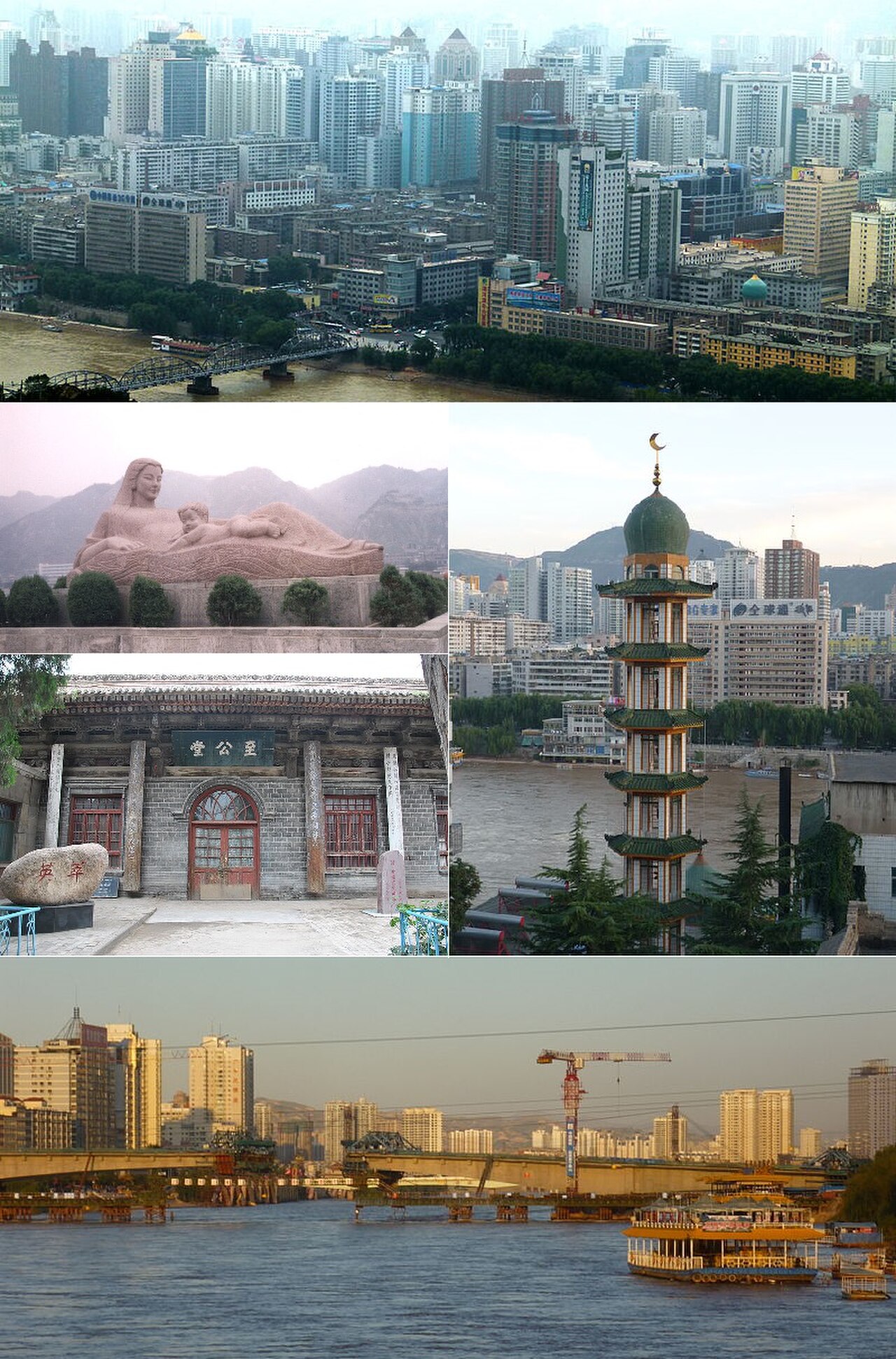
The Yellow River scenic corridor is a landscaped belt Lanzhou has built along both banks, stringing Zhongshan Bridge, White Pagoda Hill, the Waterwheel Garden, and the Yellow River Mother sculpture into one line. By day you can walk the riverside road, watch the water flow and the white pagoda on the far bank, or go down to a wharf for a ride on a sheepskin raft. The sheepskin raft is the old crossing craft of the upper Yellow River — a dozen inflated sheepskins lashed under a wooden frame — now turned into a tourist experience.
By night the corridor is another scene entirely. The bridge and the lights of both banks come on and reflect in the river, and on summer evenings the shore fills with people cooling off, playing chess, singing, strolling — the most human stretch of Lanzhou. Walking the whole corridor is long; the section from Zhongshan Bridge to the Yellow River Mother sculpture is enough.
Zhongshan Bridge
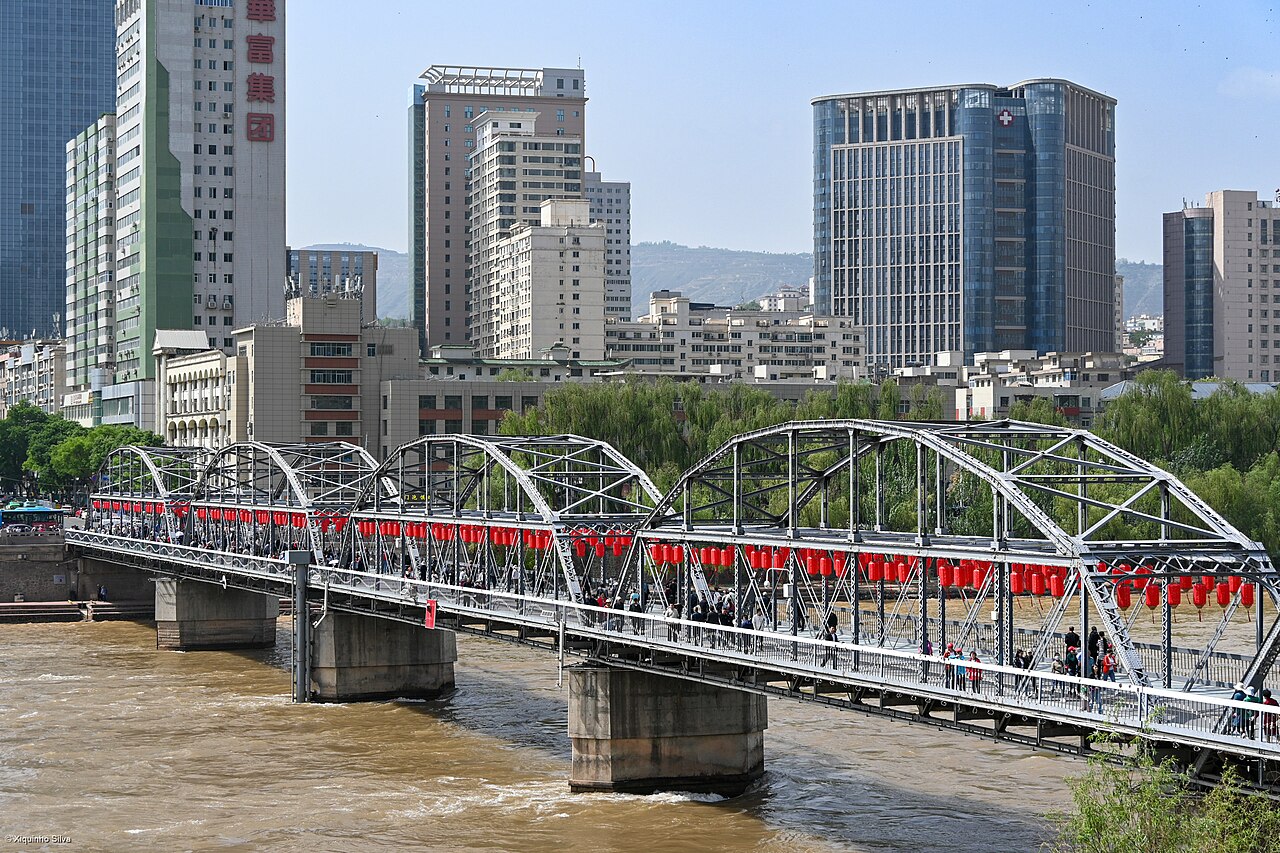
Zhongshan Bridge spans the Yellow River and is Lanzhou's landmark, a bridge now more than a century old. It opened to traffic on August 19, 1909, the first permanent bridge across the Yellow River in Lanzhou's history — hence its old name, the First Bridge. The contract was signed between the Gansu foreign-affairs bureau and German merchants, the steel shipped from Germany; work began in 1908 and finished in a little over a year. In 1928 it was renamed for Sun Yat-sen. During the war, to hide it from Japanese bombing, the orange-red bridge was repainted a leaden gray, a color it has kept ever since.
The steel truss bridge carries no cars now; it is a footbridge. Standing on it, the Yellow River runs beneath your feet, White Pagoda Hill rises ahead, and the old city spreads on either side. Lit up at night, the bridge is Lanzhou's most photographed spot. In 2006 it was listed as a national-level protected cultural relic.
White Pagoda Hill Park
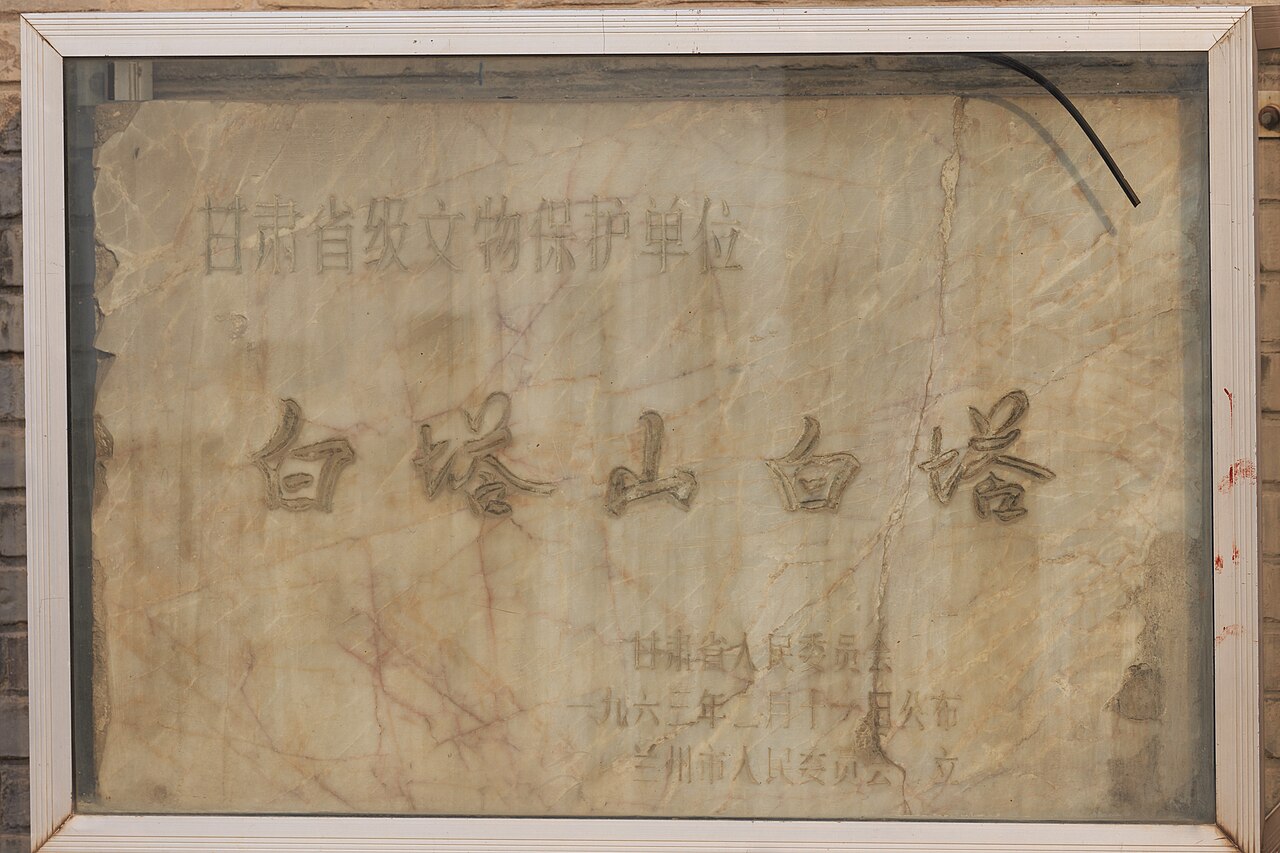
White Pagoda Hill rises on the north bank of the Yellow River, about 1,700 meters above sea level, named for the white pagoda on its summit. That pagoda was built by Mongols in the Yuan dynasty, and the White Pagoda Temple was rebuilt on the site in the Ming, followed over the centuries by the Sanxing Hall, the Wenchang Palace, and the Kuixing Pavilion. Hill and river, north and south, cradle the old city between them — Lanzhou's natural barrier, which is why people speak of the hill embracing the Golden City.
People climb White Pagoda Hill for one thing: the view of Lanzhou from above. From the summit or the mid-hill pavilions, the whole Yellow River, Zhongshan Bridge, and the city skyline lie at your feet. The park is free, with a winding footpath and a cable car. Those of average fitness ride up and walk down, the least taxing way.
Gansu Provincial Museum
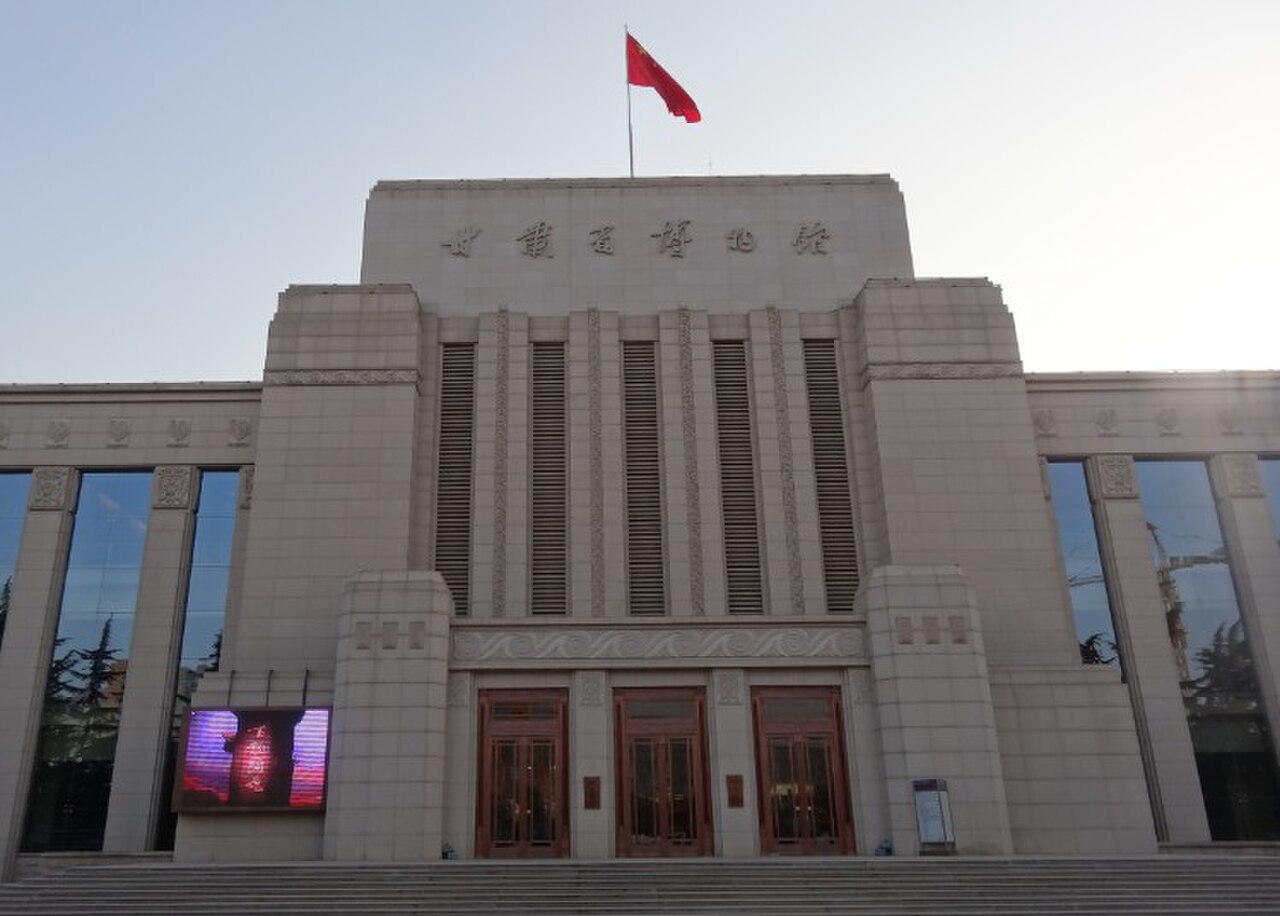
The Gansu Provincial Museum is one of the best uses of time in Lanzhou, rated a national first-grade museum in 2012. Its roots go back to the Gansu Science Education Institute of 1939, one of the earliest regional museums in western China. It has eighteen halls and holds more than 350,000 cultural relics and natural specimens, sixteen of them national treasures.
The single most famous object here is the Bronze Galloping Horse — the horse most people know as Horse Treading on a Flying Swallow, a bronze steed with three legs in the air and one hind hoof on the back of a flying bird. Unearthed at the Leitai tomb in Wuwei in 1969, it now serves as the logo of China tourism. Beyond the horse, Gansu painted pottery, Silk Road relics, and Buddhist statuary are the museum's strengths. It is open Tuesday to Sunday, closed Monday, and free since 2008.
Lanzhou Waterwheel Garden
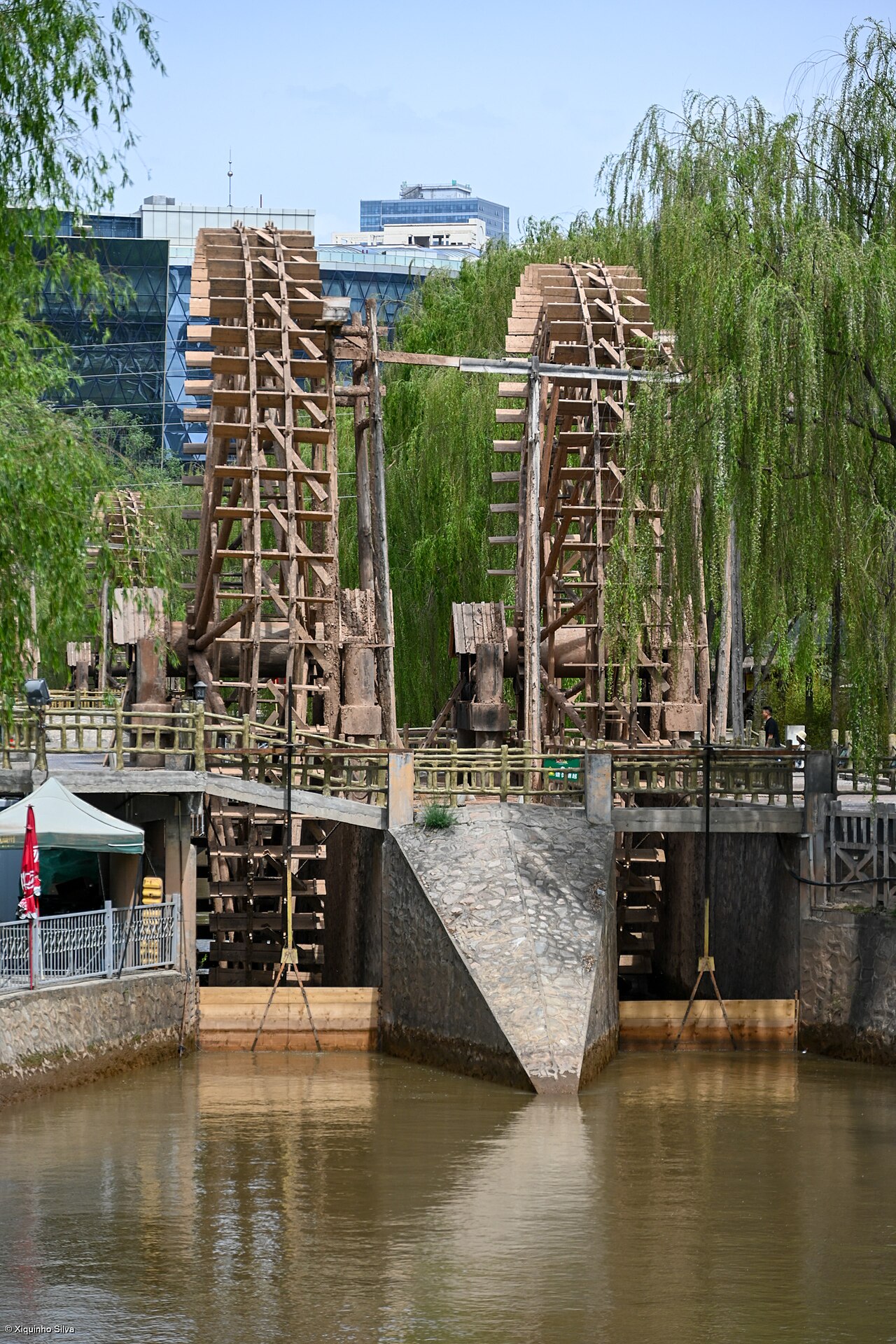
The Waterwheel Garden sits on the western section of the riverside road, Zhongshan Bridge to its east and the Yellow River Mother sculpture to its west, one stop on the scenic corridor. Lanzhou once stood dense with waterwheels along both banks and was known as the city of waterwheels. These Yellow River wheels were spread after the Ming-era Lanzhou native Duan Xu brought the technology back from the south; turned by the river itself, they lifted water to irrigate the fields on both shores. The garden holds wheels large and small, the biggest still able to turn and raise the river water bucket by bucket — the old face of Lanzhou made physical.
The garden also shows how the wheels were built and how they worked, and a circuit does not take long. It is free and best visited together with the scenic corridor, a short walk from Zhongshan Bridge.
Yellow River Mother Sculpture
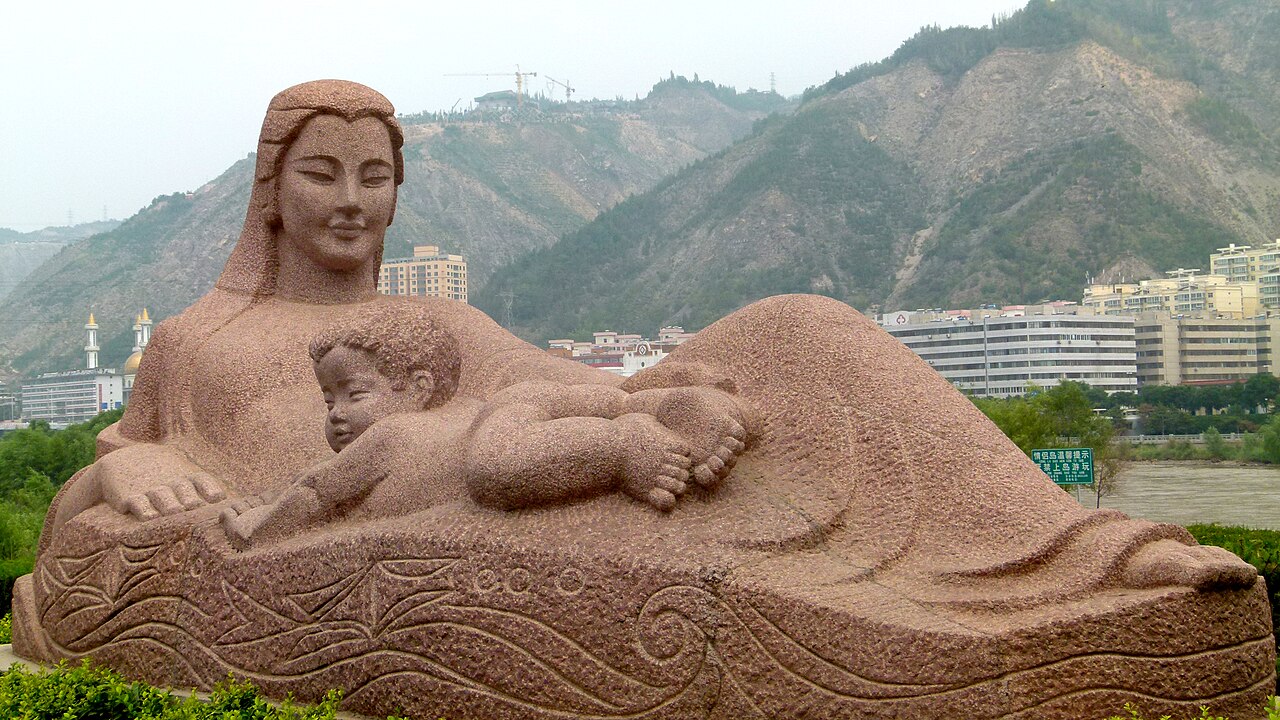
The Yellow River Mother sculpture stands on the middle section of South Binhe Road, a granite statue by the Gansu sculptor He E, six meters long and weighing over forty tons. It shows a reclining mother holding an infant boy, her expression serene, symbolizing the Yellow River nursing the Chinese nation. It is Lanzhou's best-known piece of public art and a must-stop for many visitors.
The sculpture stands right by the river, the north-bank hills behind it and the ceaseless water in front. It is not a place that needs dedicated time — pass by, look, take a photo — and it slots neatly between Zhongshan Bridge and the Waterwheel Garden, all of them reached in one walk along the corridor.
Eating in Lanzhou
In Lanzhou the first meal has to be a bowl of beef noodles. Proper Lanzhou beef noodles follow the rule of one clear, two white, three red, four green — clear broth, white radish, red chili oil, green coriander and garlic sprouts — and the noodles come in widths from hair-thin to wide ribbon. Locals have a bowl for breakfast, a few yuan. Niangpi is a cold dressed noodle dish best in summer; grey beans and sweet fermented rice are the sweet side; hand-pulled mutton and mutton skewers are the northwestern staples. Beef noodle shops are everywhere — pick one packed with locals and you cannot go far wrong. Many old shops sell out by early afternoon, so eat your noodles early.
How to arrange the route
Three days is enough to enjoy the city and its surroundings.
Day one, straight to the Yellow River scenic corridor on arrival: walk from Zhongshan Bridge to the Yellow River Mother sculpture, the Waterwheel Garden along the way, then the sunset and the lights from the bridge at dusk.
Day two: White Pagoda Hill in the morning for the full view of Lanzhou, the Gansu Provincial Museum in the afternoon for the Bronze Galloping Horse and the painted pottery.
Day three is yours to choose. Go a bit farther to Wuquan Mountain or eat your way through the night market; or keep it easy with another sheepskin raft ride on the Yellow River, or a teahouse on the bank for an afternoon. In three days you have tasted Lanzhou's noodles, river, bridge, and museum.
Things to confirm before you go
- The gap between day and night temperatures is wide; bring a jacket even in summer, and the riverbank is windy — keep back from the edge.
- The Gansu Provincial Museum is closed on Mondays; plan for Tuesday through Sunday.
- Lanzhou sits around 1,500 meters. Most people feel nothing and normal activity is fine.
- Many beef noodle shops close by early afternoon; if you want the best, go early.
- The sheepskin raft is a water activity; ask about safety measures and wear a life jacket.
Frequently asked questions
How many days for Lanzhou?
Two days in the city and one for the surroundings makes a comfortable three. The corridor and the museum alone can be done in two.
Is Lanzhou beef noodles the same as the Lanzhou ramen outside?
No. Lanzhou's noodles have clear broth and fragrant chili oil, come in many widths, and locals eat them for breakfast — not the same thing as the chain-store Lanzhou ramen found elsewhere.
Where is the Yellow River Mother sculpture?
On the middle section of South Binhe Road, next to the Waterwheel Garden and Zhongshan Bridge, reached along the scenic corridor.
Will I get altitude sickness in Lanzhou?
Almost certainly not. At about 1,500 meters, Lanzhou is lower than Kunming, and normal sightseeing is fine.
Sources
The facts in this article were checked against the following Chinese Wikipedia entries, retrieved August 25, 2025.
- Lanzhou (city) https://zh.wikipedia.org/wiki/兰州市
- Zhongshan Bridge (Lanzhou) https://zh.wikipedia.org/wiki/中山桥_(兰州)
- White Pagoda Hill Park https://zh.wikipedia.org/wiki/白塔山公园
- Gansu Provincial Museum https://zh.wikipedia.org/wiki/甘肃省博物馆
The Chinese Wikipedia entries for the Waterwheel Garden and the Yellow River Mother sculpture are still incomplete; their basic facts were additionally verified against public news and encyclopedia sources.
All photos are from Wikimedia Commons, used under CC licenses; re-use requires attribution.
- lanzhou-river.jpg from File Lanzhou Montage.jpg, montage by Lzy881114, CC BY-SA 3.0
- lanzhou-bridge.jpg from File Zhongshan Bridge, Lanzhou (53725925145).jpg, by xiquinhosilva, CC BY 2.0
- lanzhou-baita.jpg from File Lanzhou Ci'en Si Ta 2013.12.29 10-49-12.jpg, by Zhangzhugang, CC BY-SA 4.0
- lanzhou-museum.jpg from File New Exhibition Building of the Gansu Provincial Museum.jpg, by 幽灵巴尼, CC BY-SA 3.0
- lanzhou-shuiche.jpg from File 兰州水车博览园 2024-05-11 08.jpg, by xiquinhosilva, CC BY 4.0
- lanzhou-muqin.jpg from File Mother Huang He Lanzhou.jpg, by Brücke-Osteuropa, CC0