Huangshan Travel Guide: Five Stops in Huizhou's Hills and Villages (with a Three-Day Itinerary)
Huangshan City sits at the southern tip of Anhui, wedged between Anhui, Zhejiang, and Jiangxi, and goes by its old name, Huizhou. The city takes its name from a mountain — a mountain so famous that the whole prefecture was renamed after it. But Huangshan is more than its mountain; the villages, old streets, and ancient towns below hold another, quieter layer, which is Huizhou itself. The Huizhou merchants carried their trade across the country, then turned the money into courtyard houses, ancestral halls, and memorial arches of grey brick and black tile. The five places below — Mount Huangshan, Hongcun, Xidi, Tunxi Old Street, and the Huizhou Ancient City — have all had their origins checked against public sources. Coming to Huangshan, spend half your energy on the mountain and the other half on the old villages beneath it.
When to come to Huangshan
Each season on Huangshan has its own appeal, but spring and autumn are the most comfortable. April to June brings azaleas and sea of clouds; September to November is clear and crisp, the most reliable time for sunrise and cloud seas. Summer is peak season, cool on the mountain but crowded. Winter is Huangshan's most underrated season — snow on the pines and rocks, cloud seas, and rime ice — though the paths are slippery, so mind your step. The weather changes fast; check the forecast before going up, and a raincoat beats an umbrella. On holidays and in summer, book mountain lodging early — summit beds are the tightest.
Places worth visiting
Mount Huangshan
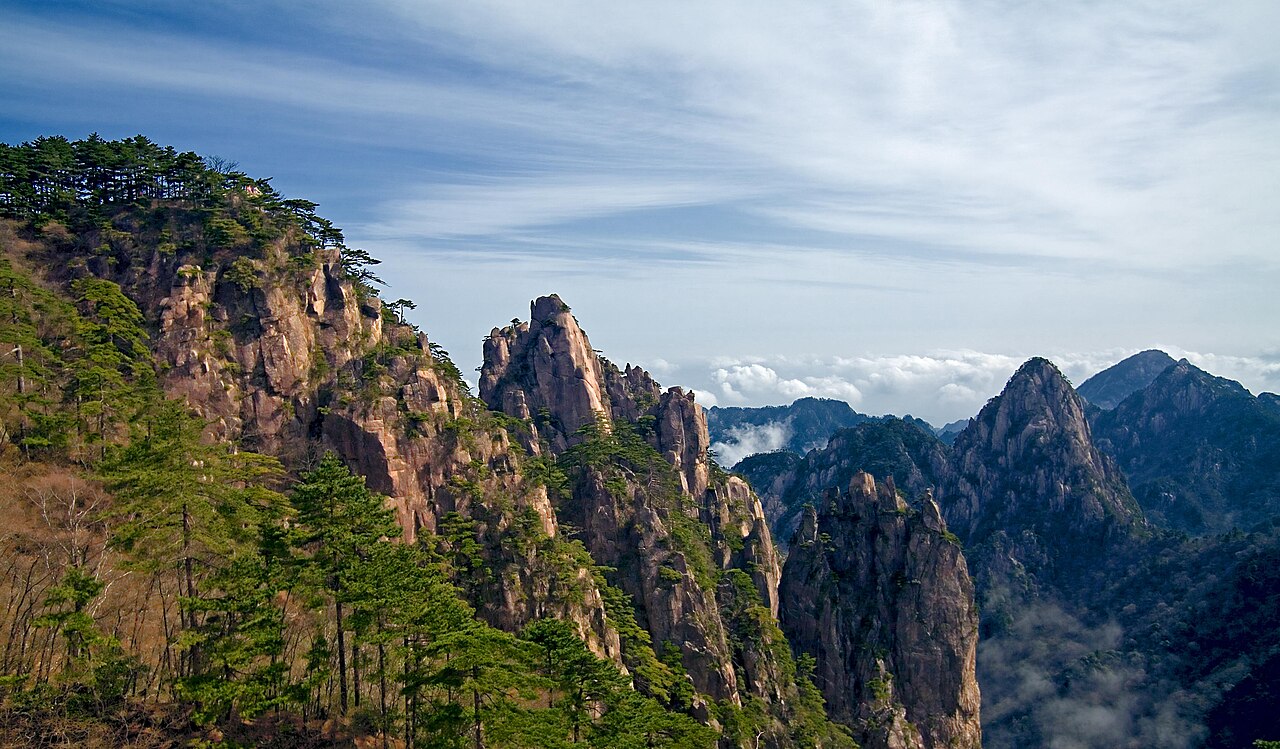
Mount Huangshan lies within Huangshan City, a granite massif about forty kilometers long from north to south, its highest peak, Lotus Peak, reaching 1,864 meters. It was originally called Mount Yi, renamed by Emperor Xuanzong of Tang in the sixth year of Tianbao because the Yellow Emperor was said to have refined his elixir here. The Ming traveler Xu Xiake climbed it twice and left behind the line: after the Five Sacred Mountains, no mountain; after Huangshan, no mountain. The mountain is famed for its four wonders — strangely shaped pines, grotesque rocks, seas of cloud, and hot springs — and the Welcoming Pine grows on Yuping Peak, the single most familiar tree to Chinese people.
Think through your route before going up. Huangshan has several cableways on its front and back slopes; most people go up at Yungu Temple and down at Yuping, or the reverse, covering the main sights in a day, though seeing the sunrise means a night on the summit. Bright Summit, Tiandu Peak, and Lotus Peak are the high points; on a clear day the cloud sea rolls beneath your feet in a way few places can match. Mount Huangshan was inscribed in 1990 as a World Heritage site for both its culture and nature. The trails are well built but stepped; those of average fitness take the cable cars to save their legs.
Hongcun
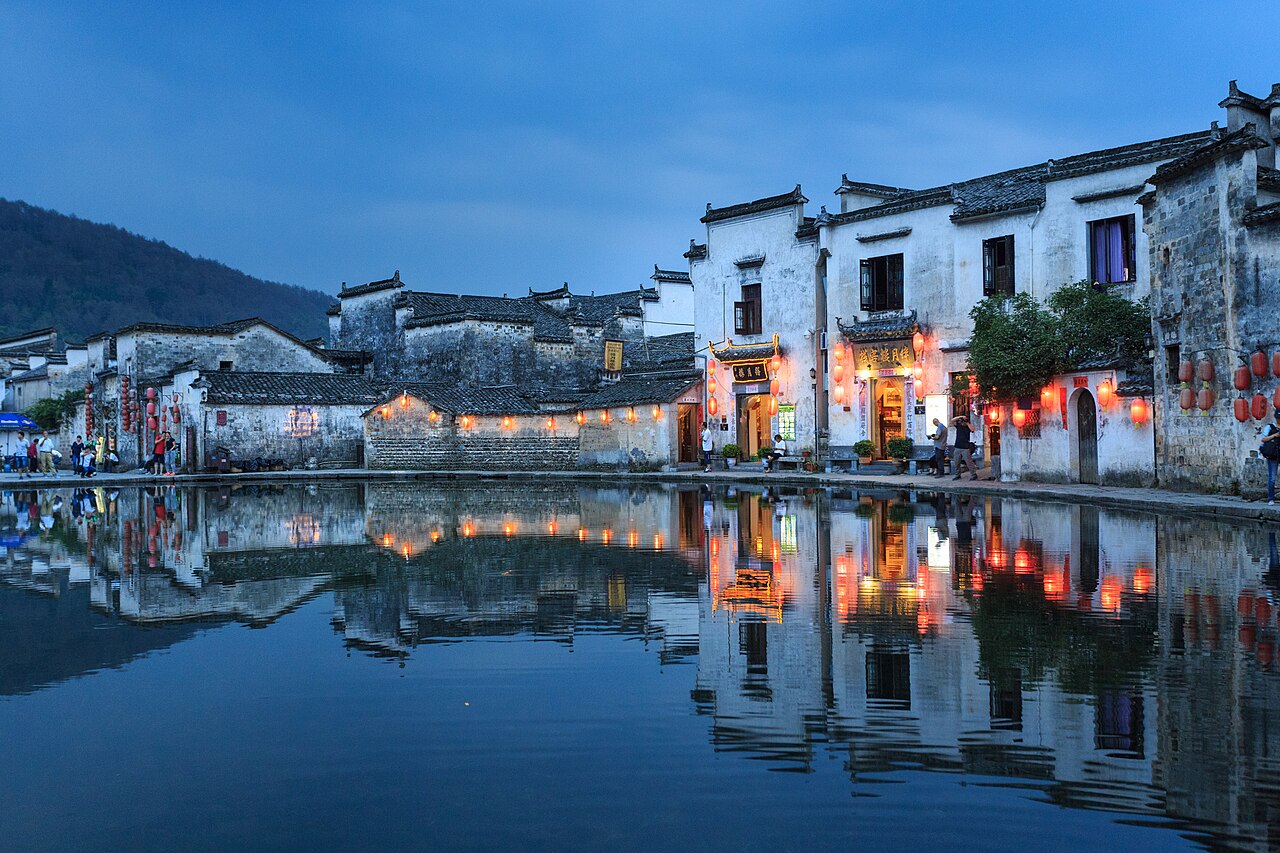
Hongcun, in Yi County, is the face of the Huizhou villages. Founded in the Southern Song Shaoxing era and originally called Hongcun, it was the seat of the Wang clan. In the Ming Yongle reign the clan elder brought in a feng shui master to re-lay the village and channel water through it, with large-scale building again in the mid-Qing. The whole village is laid out like an ox: the water channels are its intestines, the crescent Moon Pond its stomach, and the South Lake its belly — a water system unique among China's ancient villages.
Hongcun's most famous image is the grey brick and black tile reflected in the South Lake against the distant hills, like an ink wash painting. The lanes, horse-head walls, and carved gateways are all well preserved, and a circuit runs two to three hours. In 2000 Hongcun and Xidi were inscribed together as the Ancient Villages in Southern Anhui, a World Heritage site. It is a little over an hour from the city and close to Xidi, so the two villages can share a day.
Xidi
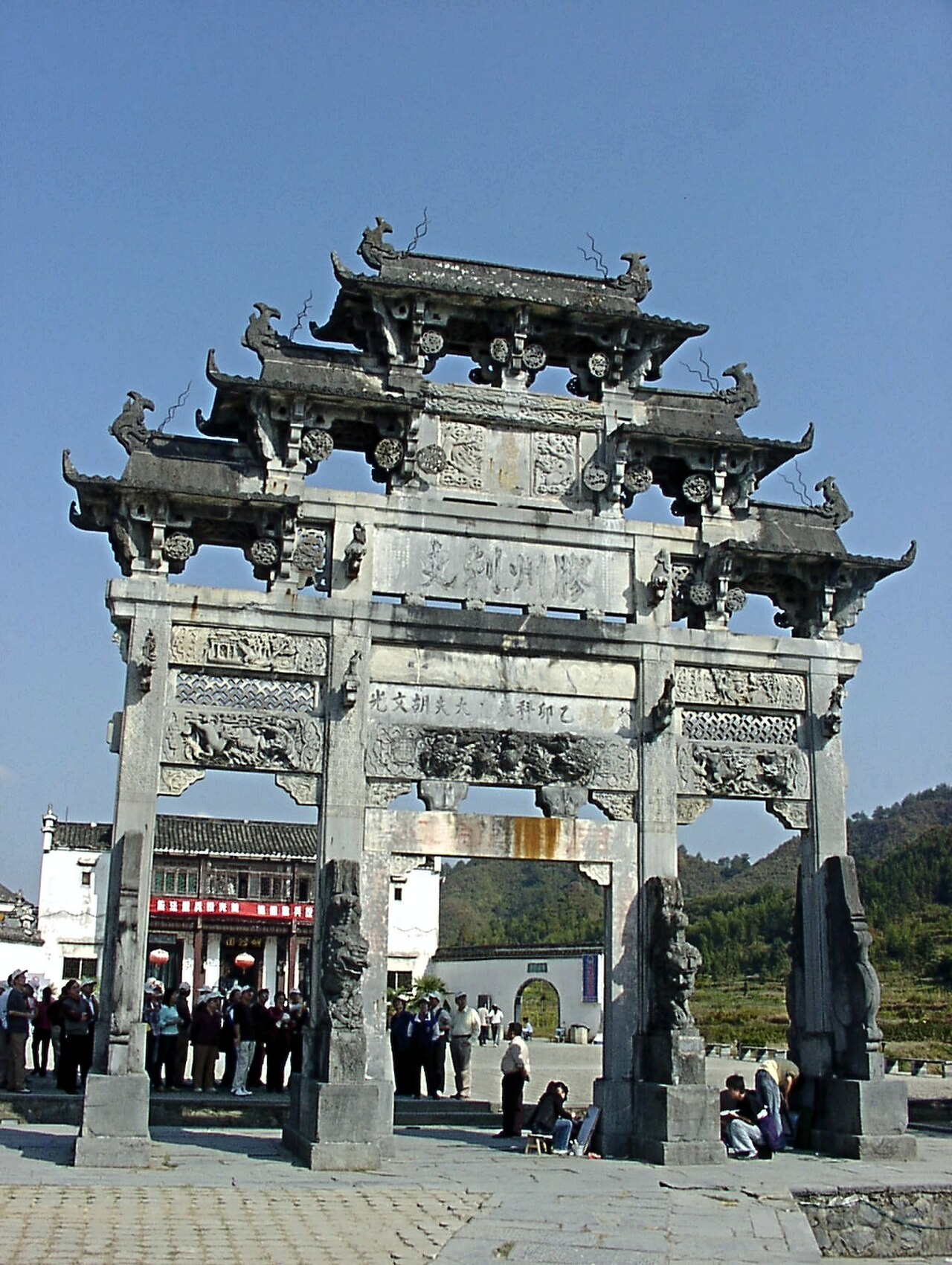
Xidi is also in Yi County, not far from Hongcun, a settlement of the Hu clan bound by blood. The Hus began trading in the mid-Ming, prospered, and returned to build houses, ancestral halls, roads, and bridges, until by the eighteenth and nineteenth centuries the village held some six hundred households. Today more than 120 Ming and Qing houses survive, along with three ancestral halls, and a memorial arch for the prefect Hu Wenguang stands at the village entrance as Xidi's landmark.
Where Hongcun is soft and watery, Xidi is plainer and more bookish. One main street runs east to west, with parallel lanes to either side, the alleys narrow and deep, the walls inscribed with family precepts and couplets that speak of the Huizhou creed of study, office, and honest trade. Xidi too was inscribed in 2000. Both villages are worth seeing; with time for only one, choose by taste — Hongcun for water, Xidi for lanes.
Tunxi Old Street
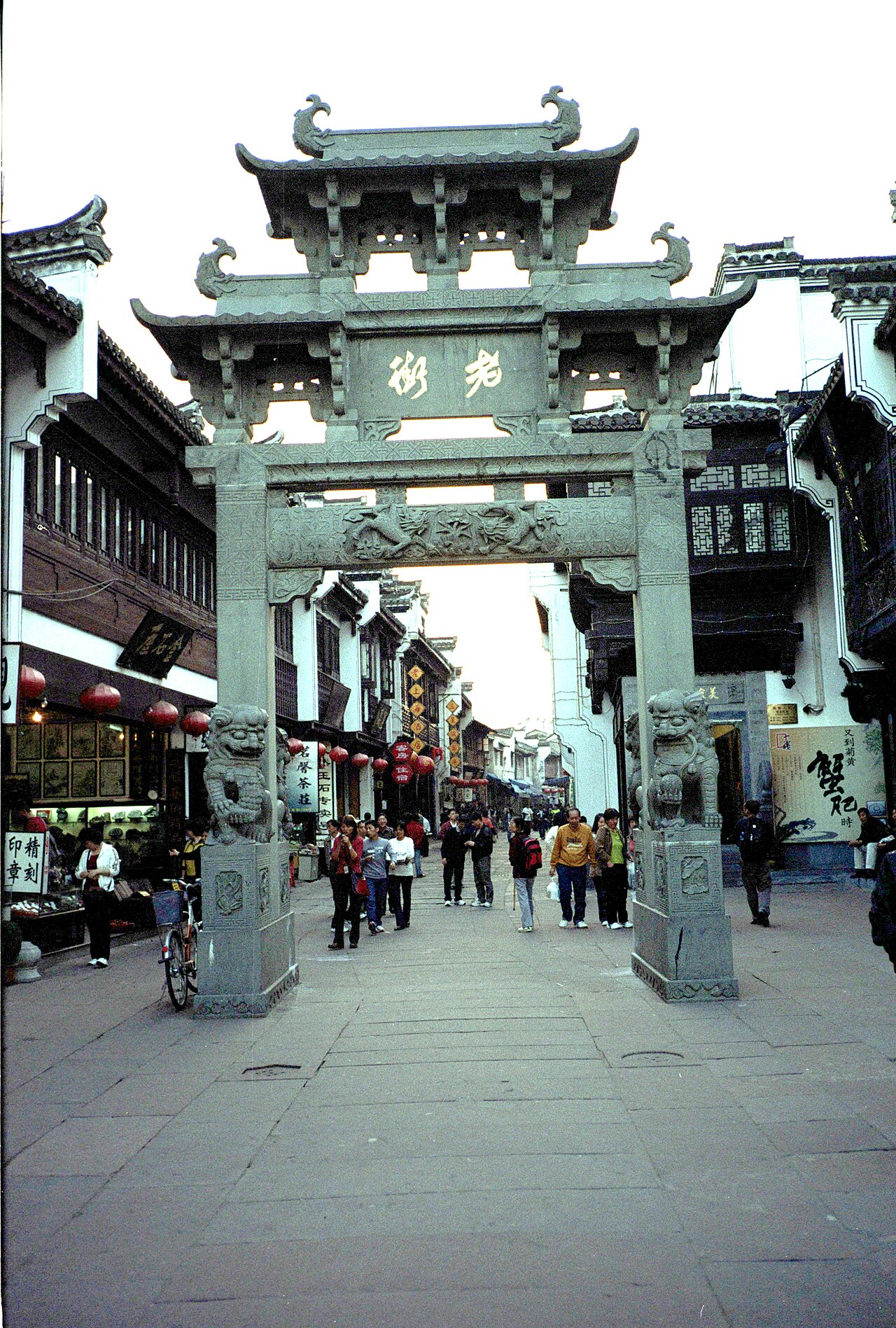
Tunxi Old Street is in downtown Huangshan, a pedestrian street over a thousand years old, tracing back to the Song dynasty. The street runs about a kilometer, lined on both sides by well-preserved Ming and Qing Huizhou buildings — white walls, black tiles, horse-head walls, carved doors and windows. The shops sell the four treasures of the study, calligraphy and paintings, and antiques, alongside Huizhou restaurants and stalls of Huangshan shaobing and hairy tofu. In 2009 it was named a Chinese Historical and Cultural Street, alongside Beijing's Guozijian Street and Suzhou's Pingjiang Road.
The old street fits best at either end of a trip, a wander on arrival or before leaving. It is free, right in the city center, and takes on a warm glow after dark. Inside stands a memorial hall to Dai Zhen, the Qing scholar of Huizhou. Buy your souvenirs here — Huangshan shaobing and Maofeng tea are the local specialties — and compare prices before you commit.
Huizhou Ancient City
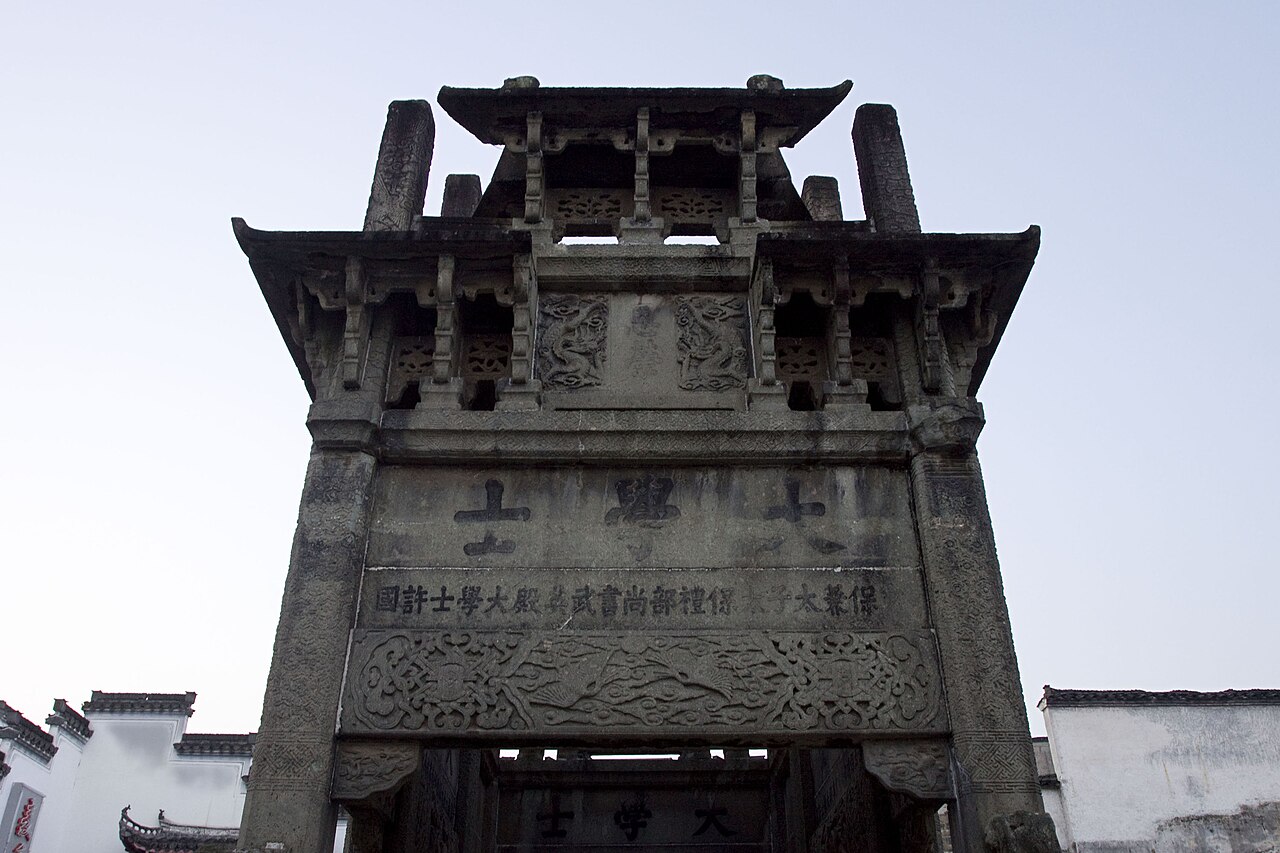
The Huizhou Ancient City lies in the county town of Shexian, the old seat of Huizhou Prefecture and the source of Hui culture. Within it stands the Xuguo Stone Arch, an eight-legged memorial gateway and a national protected cultural relic, built for the Ming grand secretary Xuguo and unique among the country's arches. Huizhou's ancestral halls, memorial arches, and houses are known together as the three wonders of its architecture, all of them on display in the ancient city.
The city still holds part of its wall and gate towers, and the deep courtyard houses of Doushan Street preserve the look of the old merchant families. The surrounding villages of Yuliang and Tangyue are also Huizhou villages, Tangyue's cluster of arches especially famous. Shexian is half an hour from downtown Huangshan, half a day is enough, and it pairs with Tunxi Old Street into a single day's itinerary.
Eating in Huangshan
Huangshan's food is Hui cuisine's home ground. Hui cooking favors heavy oil, heavy color, and slow fire; its signature is stinky mandarin fish, foul-smelling but savory, the pride of Huizhou. Hairy tofu, pan-fried from tofu grown with a coat of mold, is another local original. Stone-ear stewed with chicken, knife-board ham, and the Huizhou first-grade pot are the hearty dishes. For snacks, Huangshan shaobing is the most common souvenir, tiny and crisp with a dried-vegetable-and-pork filling; Huizhou guo and stone guo are the old street-corner flavors. For drinking, remember the tea — Huangshan Maofeng and Keemun black tea both come from this region. For stinky fish and hairy tofu, go to a proper Hui-cuisine restaurant, not a stand at the scenic-area gate.
How to arrange the route
Three days covers both mountain and villages.
Day one, up the mountain: leave downtown early, ride the cableway, cover Bright Summit, the Welcoming Pine, and the other main sights, and come down to the foot in the evening. For the sunrise, book summit lodging in advance and stay an extra night.
Day two goes to the villages. Hongcun in the morning and Xidi in the afternoon — both in Yi County, both doable in a day — then back to Tunxi for the night.
Day three, the city. Tunxi Old Street in the morning, then the Huizhou Ancient City in Shexian in the afternoon for the Xuguo Stone Arch, with Tangyue's arch cluster if time allows. In three days Huangshan's mountain, water, villages, and streets are all covered.
Things to confirm before you go
- The weather on Huangshan changes fast; check the forecast, bring a raincoat, wear non-slip shoes, and take extra care on icy paths in winter.
- Summit lodging is scarce and sells out long in advance on holidays and in summer — book early if you want the sunrise.
- The cableways run on schedules with long queues in peak season; plan your up and down times.
- Hongcun and Xidi both charge admission; doing both in one day means not packing the schedule too full.
- Stinky mandarin fish and hairy tofu are acquired tastes; try a small portion first.
Frequently asked questions
How many days for Huangshan?
Three is comfortable — a day on the mountain, a day for the villages, and a day for the city and the ancient town. Add a summit night if you want the sunrise.
Hongcun or Xidi?
Both are worth seeing. Hongcun has the South Lake water view and the ox-shaped water system; Xidi has the deep lanes and a bookish air. With time for one, choose by taste — the two villages are close, so a day covers both if you move.
Is climbing Huangshan tiring?
There are many steps, and a fitness threshold, but the cable cars take out most of the climbing. Those of average fitness ride up and down and walk between the sights, which still covers the main points.
When is the best cloud sea on Huangshan?
Spring and autumn have the best odds, especially just after rain. September to November is clear and crisp, the steadiest stretch for sunrise and cloud sea.
Sources
The facts in this article were checked against the following Chinese Wikipedia entries, retrieved August 25, 2025.
- Huangshan (city) https://zh.wikipedia.org/wiki/黄山市
- Mount Huangshan https://zh.wikipedia.org/wiki/黄山
- Hongcun https://zh.wikipedia.org/wiki/宏村
- Xidi https://zh.wikipedia.org/wiki/西递
- Tunxi Old Street https://zh.wikipedia.org/wiki/屯溪老街
- Shexian https://zh.wikipedia.org/wiki/歙县
All photos are from Wikimedia Commons, used under CC licenses; re-use requires attribution.
- huangshan-mountain.jpg from File Huangshan pic 4.jpg, by Chi King, CC BY 2.0
- huangshan-hongcun.jpg from File Yixian Hongcun 2016.09.09 18-17-55.jpg, by Zhangzhugang, CC BY-SA 4.0
- huangshan-xidi.jpg from File Xidi1024x1360.jpg, by RolfMueller, CC BY-SA 3.0
- huangshan-tunxi.jpg from File Loujiepailou.jpg, by Gisling, CC BY 2.5
- huangshan-huizhou.jpg from File Xuguoshifang 5225.jpg, by Doctoroftcm, CC BY-SA 3.0